

Trees from Seed
CanopyBloomington is working with Ray Major, a local, to share information on how to plant trees from seed.
Why Grow Trees by Direct Seeding?
1. It is the way nature does it
2. Eliminates the expense and labor of purchasing, transporting, and transplanting nursery stock.
3. Eliminates the need to stake and water the young tree.
4. Allows the planting of as many trees as desired at modest cost and labor.
5. Makes growing trees accessible to everyone.
6. Produces healthy trees which grow at a faster annual rate than transplants.
7. For inspiration, watch this
Seed Collection / Gathering
1. What is the best month to collect these seeds?
- Check out our seed guide!
2. Where can you legally collect seeds?
-
You can collect seeds in right-of-way, parks, and other public spaces (individual seed collecting is okay in Brown County).
-
DISCLAIMER: Please do not enter private property without first checking with the homeowner. Please check with the nature center before collecting seed.
3. How do you know if the seeds you collect are viable?
-
Pull the seed out of the shell (immature vs. mature)
-
Freshly fallen seed on the ground
-
Examination
-
Does the seeds have cracks or holes or mold? This most likely means the seeds are not viable.
-
Float test (acorns fo sho)
-
Non-viable seeds are generally hollow seeds will float
-
Viable seeds will sink
-
-
Sample cut test (for large seed collecting and/in large lots)
5. How to find seeds
Online seed dealers
-
Find in a park or local area
- Native plant society seed swaps
Determine Species
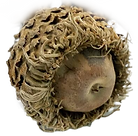
Bur oak

Kentucky coffeetree
-
Tulip poplar, yellowwood, bass wood, amilancher, etc.
-
Hard to reproduce and grow
-
-
Ash, box elder, silver maple
-
City said no because they are undesirable (??)
-
-
Maple
-
Bloomington's tree canopy is 30% maple tree (too many!)
-
-
Black walnut
-
Giant walnuts that fall on head
-
Seed Prep & Storage
-
DEPENDS ON THE SPECIES --> HOW DO WE DIFFERENTIATE THAT?? CLICK SEED....
- Keep them cool and moist
-
Scarification
-
legumes (Kentucky coffee tree and legumes)
-
When to do it
-
-
Soaking overnight
-
When to do it
-
When to plant
DEPENDS ON THE SPECIES --> HOW DO WE DIFFERENTIATE THAT?? CLICK SEED...
Select your Location / Where to plant
RIGHT TREE RIGHT PLACE
DEPENDS ON THE SPECIES --> HOW DO WE DIFFERENTIATE THAT?? CLICK SEED...
Site preparation
Kill da grass (in advance)
- Cardboard / smother / mulching
-
Till the ground
-
Spot spray with herbicide
What seeds do better with site prep --> Sycamore
If you cannot prep the site, that's okay! Just turn the soil day of
How to plant
This process will be the same for any tree
1. Grab a simple garden tool
2. Bare minimum: let that seed touch the dirt!
3. Plant multiple seeds
4. What is the depth rule??
VIDEO WITH BILL DANIELS
Protect the seed/next section is after care
0. Mark the seed so you know where you planted it
1. Protecting the seed. How to keep squirrels and chipmucks out... Oaks...
-
droste can
-
wire basket
-
landscape fabric
2. Watering /care
3. Weeding / mulching
4. What to expect when you are expecting
5. Caging techniques (from deer)
6. Surrounding with other plants
Thinning (2nd or 3rd season)
Co-planting
- Marigolds for deer protection
Tree List (make list; similar)
Bur oak
Quercus macrocarpa
Large
70 - 80 feet
70 - 80 feet
Irregular, round
Golden brown
Insignificant
Full
Size:
Mature Height:
Crown Spread:
Form:
Fall Color:
Flower:
Sun:


Description: Large deciduous tree that grows best in medium moisture, well-drained soils in full sun. Bur oak acorns are large and considered messy, but they are great for birds and mammals.
White Oak
Quercus alba
Large
50 - 80 feet
100 feet
Broad, round
Reddish-brown
Insignificant
Full
Size:
Mature Height:
Crown Spread:
Form:
Fall Color:
Flower:
Sun:


Description: Large deciduous tree that grows best in medium moisture, well-drained soils in full sun. It is one of the best-looking Oaks in the winter due to the light gray platey bark and open crown.
Princeton Elm
Ulmus americana
Large
60 - 80 feet
40 - 70 feet
Vase
Yellow, gold
Insignificant
Full
Size:
Mature Height:
Crown Spread:
Form:
Fall Color:
Flower:
Sun:


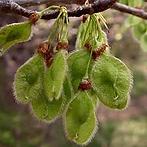
Description: Large deciduous tree the grows best in medium moisture, well-drained soils in full sun. Hardy and adaptable these trees thrive in urban settings. Small green flowers appear in spring before foliage emerges and become seeded wafer-like whirlybirds.
Kentucky Coffee Tree
Gymnocladus dioica
Large
60 - 80 feet
40 - 55 feet
Irregular, Oval
Yellow
Showy
Full
Size:
Mature Height:
Crown Spread:
Form:
Fall Color:
Flower:
Sun:


Description: Tall deciduous tree with rough, scaly gray-brown bark and large compound leaves. Greenish white flowers appear in late spring giving way to flattened reddish brown pods which ripen in October and persist well into winter which can be eaten after roasting and turned into a coffee like beverage. the grows best in medium moisture, well-drained soils in full sun.
Tulip tree
Liriodendron tulipifera
Large
70 - 90 feet
35 - 50 feet
Round
Yellow-orange
Showy, fragrant
Full
Size:
Mature Height:
Crown Spread:
Form:
Fall Color:
Flower:
Sun:


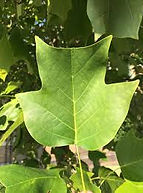
Description: Excellent tree for residential lawns, particularly for it’s golden-yellow fall color. This fast growing tree is great for pollinators and songbirds. Flowers appear in late spring.
Shumard oak
Quercus shumardii
Large
40 - 60 feet
40 - 60 feet
Pyramidal, round
Red
Insignificant
Full/part shade
Size:
Mature Height:
Crown Spread:
Form:
Fall Color:
Flower:
Sun:
Description: Large deciduous tree that grows best in moist, well-drained soils. The acorns are about an inch long with a saucer-shaped cap that are great for birds and small mammals. It's also known as a swamp red oak.


Swamp white oak
Quercus bicolor


Large
50 - 60 feet
50 - 60 feet
Broad, round
Yellow, orange
Insignificant
Full
Size:
Mature Height:
Crown Spread:
Form:
Fall Color:
Flower:
Sun:
Description: A large tree with attractive peeling bark (especially prevalent on young trees). The lobed leaves have a two-tone appearance, dark green on top with a silvery-white underside. Fall color is an orange-gold to yellow in mid-autumn. An excellent shade tree for any landscape. Acorns are large and considered messy, but they are great for birds and mammals.
Hackberry
Celtis occidentalis
Large
40 - 60 feet
40 - 60 feet
Round, Oval, Vase
Yellow-green
Insignificant
Full/part shade
Size:
Mature Height:
Crown Spread:
Form:
Fall Color:
Flower:
Sun:


Description: Medium to large deciduous tree with greenish flowers in spring. Flowers can give way to found, fleshy berry-like fruits that can mature to deep purple.
Yellowwood
Caldrastis kentukea
Medium
30 - 50 feet
40 - 55 feet
Round
Yellow-orange
Showy, fragrant
Full
Size:
Mature Height:
Crown Spread:
Form:
Fall Color:
Flower:
Sun:


Description: Excellent tree for residential lawns, particularly on smaller properties. Also may be planted near patios and terraces. Roots go deep, so other plants may be easily grown underneath.
American Hornbeam
Carpinus Caroliniana
Medium
20 - 35 feet
20 - 35 feet
Round
Orange-red
Insignificant
Full/Part shade
Size:
Mature Height:
Crown Spread:
Form:
Fall Color:
Flower:
Sun:


Description: Slow-growing small to medium deciduous tree understory tree with dark green leaves turning shades of yellow, orange, and red in the fall.
Black Gum
Nyssa sylvatica
Medium
30 - 50 feet
20 - 30 feet
Vase
Red
Insignificant
Full
Size:
Mature Height:
Crown Spread:
Form:
Fall Color:
Flower:
Sun:


Description: Slow-growing medium deciduous tree with greenish leaves turning bright scarlet in the fall. Technically edible fruit, though very sour, is highly attractive to birds and wildlife.
Flowering dogwood
Cornus florida
Small
15 - 30 feet
15 - 25 feet
Broad, Round
Red
Showy, fragrant
Full/part shade
Size:
Mature Height:
Crown Spread:
Form:
Fall Color:
Flower:
Sun:
Description: Showy white, red, or pink flowers appear before the leaves in early spring and turns a brilliant reddish-purple in fall. This tree is sensitive to adverse soil and environmental conditions such as road salt and pollution. It is best planted in acidic soil.


Serviceberry
Amelanchier
Small
15 - 25 feet
15 - 25 feet
Irregular, Round
Red
Showy, fragrant
Full/part shade
Size:
Mature Height:
Crown Spread:
Form:
Fall Color:
Flower:
Sun:


Description: Early flowering, this large shrub/small tree produces edible berries that turn dark purple when ripe. The fruit is commonly used in jams, jellies, and pies.
Redbud
Cercis canadensis
Small
20 - 30 feet
25 - 35 feet
Irregular, Round
Yellow
Showy
Full/part shade
Size:
Mature Height:
Crown Spread:
Form:
Fall Color:
Flower:
Sun:

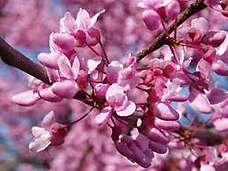

Description: Small, fast-growing deciduous tree easily identified by its seed pods. Bright pink/red flowers bloom in early spring, quickly giving way to dull green leaves.
LOW STOCK
River birch
Betula nigra
Medium
30 - 40 feet
20 - 30 feet
Pyramidal, Round
Yellow
Insignificant
Full
Size:
Mature Height:
Crown Spread:
Form:
Fall Color:
Flower:
Sun:


