
Urban Forests: The Coral Reefs of Our Cities


Art often inspires us to think about things from a new perspective. Writer James Baldwin said, art can also "lay bare the questions which have been hidden by the answers." A new art exhibition here in Bloomington, Mulyana: Vital Ecosystems, brought new perspective for Team Canopy, helping us think about how our vital urban forests share many of the same functions for our neighborhoods and city as coral reefs do for the sea.
First, a bit about the exhibition. Mulyana: Vital Ecosystems opened on February 7 at the Sidney and Lois Eskenazi Museum of Art. It is an immersive experience, filling the Featured Exhibitions Gallery, Henry Radford Hope Wing, and runs until Sunday, June 28, 2026.

Acclaimed fiber artist Mulyana (b. 1984, Bandung, Indonesia) envisioned an underwater world in which he and his community "created intricate sculptures using recycled yarn from textile factories and plastic bags from the food delivery industry. His practice is embedded in Indonesia’s rich textile and folklore traditions and engages with pressing global social and environmental issues, like climate change, pollution, and biodiversity loss." The exhibition is a cautionary tale about what can happen to our ecosystems—in this case, coral reefs—when we neglect, or even abuse them.
Mulyana's work inspired us to think, just as coral reefs are the backbone of healthy seas, urban forests are the backbone of healthy cities. Here are some ideas that helped us find this striking parallel.
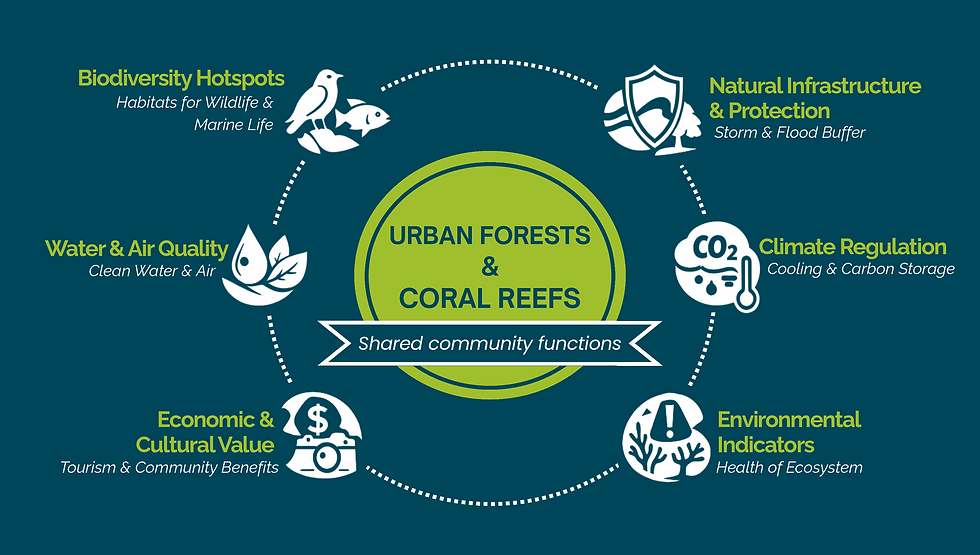
Biodiversity Hotspots: The Living Refuges
In the ocean, coral reefs provide the nooks and crannies that shelter 25% of all marine species. In our cities, urban forests act as the equivalent for thousands of species which support biodiversity. Reefs: Offer habitat, food, and breeding grounds for a staggering variety of marine life. Urban Forests: Provide essential "green islands" for birds, pollinators, and small mammals—often the only remaining refuges in dense urban environments.
Natural Infrastructure: Silent Protectors
Coral reefs are a city’s first line of defense against the sea, just as trees protect us from the elements. Reefs buffer coastlines by reducing wave energy by up to 97%, preventing erosion and storm damage. Urban Forests act as biological sponges that slow stormwater runoff and protect neighborhoods from flooding. They also function as "natural umbrellas," reducing surface temperatures by up to 8°C.
Quality Control: Filtering the Air and Water
Both ecosystems act as massive, natural filtration systems that keep their respective environments healthy. Reefs maintain water clarity and nutrient balance, often relying on neighboring mangroves to trap pollutants before they reach the coral. Urban Forests filter harmful particulate matter from the air and capture fertilizers or animal waste before they reach our water systems.
Climate Regulators: Cooling the Planet
Both systems are essential for moderating global and local temperatures. Reefs play a critical role in ocean carbon cycling and temperature regulation. Urban Forests sequester carbon and combat the "Urban Heat Island" effect through shade and evapotranspiration, significantly lowering energy costs for residents.
Economic and Cultural Pillars
Beyond their beauty, these ecosystems are vital economic drivers. Reefs support multi-billion dollar fisheries and tourism industries. Urban Forests increase property values, attract visitors, and create shared public spaces that define a city's cultural identity and foster community.
The Canary in the Coal Mine: Indicators of Health
Perhaps most importantly, both serve as indicators of how well—or poorly—we are managing our planet. Reefs tell you when they are dying. Widespread coral bleaching is a primary signal of ocean warming and chemical stress. Urban Forests can decline for many reasons. A declining tree canopy is often a direct reflection of urban neglect, rising pollution, and socioeconomic inequity.
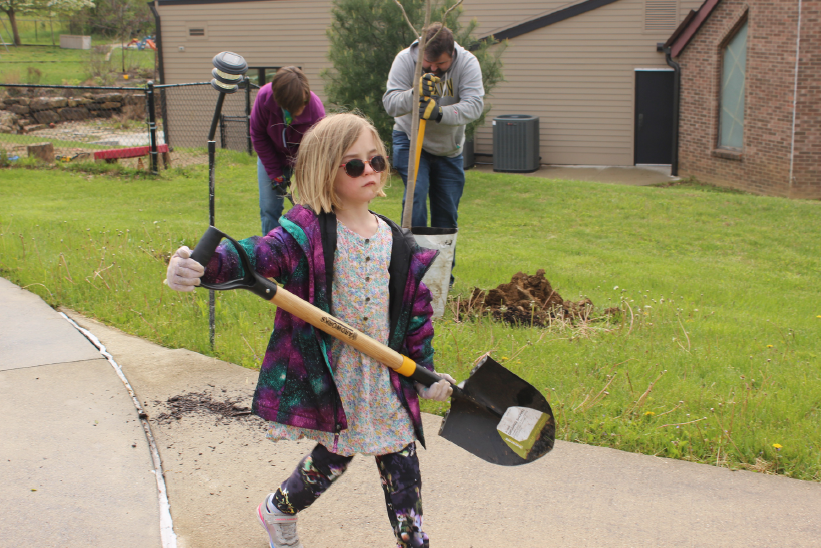
You Can Make a Difference
You don't need a degree in forestry to help your local urban forest thrive. Here are some things you can do to make a difference and get involved:
Plant with Us: Join organizations like CanopyBloomington that plant trees for residents at no charge, educate and host community planting events. Sign up for one of our Upcoming planting dates!
Plant with Purpose: When planting on your own property, choose native species to support local biodiversity. Ensure you consider the tree's mature size and light needs to avoid future infrastructure conflicts. Check out our Right Tree, Right Place to learn more.
Adopt-a-Tree Stewardship: Newly planted trees are vulnerable. You can help by watering young trees regularly during dry periods and applying mulch around the base to promote healthy root growth and prevent soil compaction.
Participate in Citizen Science: Many cities use tools like the i-Tree software suite to conduct tree inventories. You can volunteer to help map your neighborhood's canopy, identifying "gaps" where new trees are needed most.
Advocate for Green Policy: Support local ordinances that protect existing mature trees and encourage sustainable building designs that minimize tree removal.
Find Your Inspiration: Whether it be a new art exhibition or connecting with people doing good work for their communities, find what motivates you to help shape the place in which you live.
Sidney and Lois Eskenazi Museum of Art at Indiana University is a resource for research and learning with original works of art. We engage diverse audiences throughout Indiana and create a welcoming environment for all. With four specialized centers and technology-equipped learning spaces throughout the museum, we are dedicated to engaging students, faculty, artists, scholars, alumni, and the wider public through the cultivation of new ideas and scholarship.
CanopyBloomington is a social impact organization created to maximize Bloomington's tree canopy and sustainably manage Bloomington's urban forest for trees' many environmental, health, economic, and social benefits, with a focus on tree equity and community engagement. The staff, board and volunteers work year-round to plant and care for trees, improve air and water quality, and make neighborhoods healthier and more beautiful. But we can’t do it alone.
By donating to CanopyBloomington, you help fund tree-planting initiatives, educational programs, and community engagement efforts that make a lasting impact. Whether you contribute financially, volunteer for a planting event, or participate in our tree adoption programs, your involvement directly supports a greener, more pollinator-friendly Bloomington.
Join us in creating a thriving urban canopy that works for both people and our trees. Visit CanopyBloomington.org to learn more and make a donation today.


Comments