
Summer Stress: How to Tell If Your Trees Need Help

Summer, like for many of us, is a busy time for trees. They're producing food through photosynthesis, providing shade, supporting wildlife, and helping keep our neighborhoods comfortable. Although this season has brought more mild temperatures and plenty of rain so far, the hottest weeks of summer are still ahead. Learning to recognize the early signs of stress and knowing what to look for now, can help you catch problems early, ensuring your trees stay healthy for years to come.
What Causes Summer Tree Stress?
Heat, drought, recent or current construction, root damage, insect infestations, diseases, and inconsistent water intake can all contribute to a stressed tree. Young trees are especially vulnerable because their root systems are still developing. Mature trees are usually more resilient but can still struggle during prolonged drought or extreme heat.
Common Signs Your Tree May Be Stressed
Every tree is unique and can respond to the same stressors in different ways. However, some of the most common warning signs you may notice are:
Leaf scorch
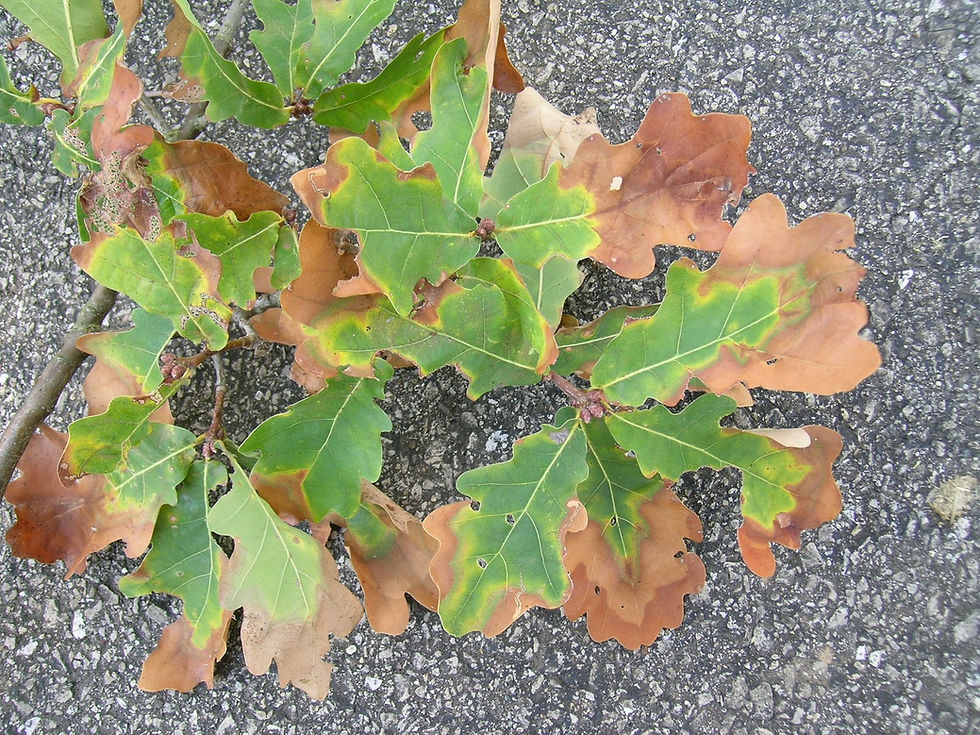
During the summer, trees are constantly losing water through tiny pores called stomata, in a healthy process called transpiration. Usually, roots take in enough water from the soil to replace the water that is lost through the process. However, sometimes due to hot temperatures, dry soil, damaged roots, improper planting sites, or other environmental stressors, the roots are not able to absorb water fast enough. The edges of the leaves are the first areas to begin to dry out and turn brown, because they are the farthest from the trees water supply. This will cause your tree's leaves to have yellow or brown crispy edges, despite the center of the leaf often remaining green.
Early leaf drop
During periods of drought, trees will sometimes shed their leaves early in order to reduce water loss. If your tree begins to drop what appear to be healthy looking leaves midsummer, it again may be trying to send you a message that it needs more water. While this can be saddening and alarming, trees often will produce a second flush of leaves later in the summer if conditions improve. Leaf drop can also be caused by insects, diseases, or other environmental stressors. If your tree appears to be well hydrated but continues dropping leaves, it may be time for further evaluation.
Yellowing Leaves (chlorosis)

If your tree's leaves begin turning a very pale green or yellow while the veins remain green, it may be experiencing chlorosis. Chlorosis happens when leaves don't produce enough chlorophyll, the pigment that gives them their green color and allows them to photosynthesize. While drought and root stress can contribute to chlorosis by reducing a tree's ability to absorb water and nutrients, it is often caused by nutrient deficiencies, compacted soils, poor drainage, or soils with a high pH. If yellowing becomes widespread, it may be a sign that your tree needs further attention.
Leaf wilting that lasts overnight
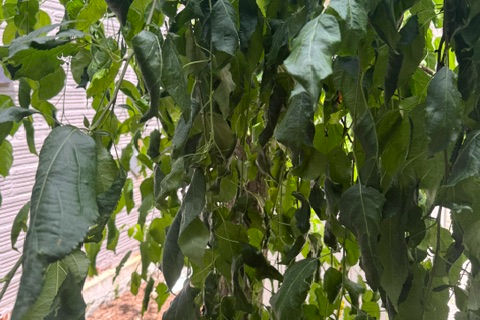
Leaf wilting is when the tree's leaves become soft, droopy, or limp due to lack of, or too much water. While it is perfectly normal for your tree's leaves to wilt on hot summer days to conserve water, the leaves should perk back up by evening or the following morning, when temperatures drop. If your tree's leaves are staying wilted for several days, your tree may be having issues moving water to it's canopy.
Dead branch tips
When water is limited, trees may again kick into survival mode and gradually sacrifice some smaller branches and twigs, in order to save the main trunk and larger branches. This is called dieback and appears as branch tips with no leaves or dead branches scattered throughout the canopy. This is similar to what is happening with leaf scorch. The outer branches are farther from the trunk and require a longer pathway for water transport.
Excessive New Shoots (Epicormic Sprouts)
Epicormic sprouts are clusters of new shoots growing from your tree's trunk or large branches. While some species naturally produce them, an increase in these shoots can indicate your tree is under stress. Trees can produce epicormic sprouts in response to drought, root damage, storm injury, excessive pruning, or declining health. These shoots are fast growing and are the tree's way of trying to produce more leaves and compensate for lost energy. Again, they don't always indicate a serious problem, but a sudden increase is worth paying attention to, especially if it's accompanied by other signs of stress.
Pests and Diseases

Trees that have been weakened by drought, heat, and other stressors are often more likely to be infested by opportunistic insects and disease, because the trees are less able to defend themselves. If you notice any boring holes, unusual bark texture, rust coloring on your leaves, mildew, cankers that appear as dead tissue, sawdust like material around the base of your tree, oozing sap, or large canopy decline, it is a good idea to have your tree(s) evaluated by a certified arborist.
What You Can Do
Trees are strong and resilient, but sometimes we all need somebody to lean on. If you apply a few simple practices, you can greatly improve your tree's ability to withstand summer conditions. Or, if your tree was planted by Canopy, send us some photos of your tree with your concerns, and we may be able to provide recommendations!
Water the root zone deeply, but not every day
You should water your tree in their root zone or dripline. If you imagine the canopy of your tree as an umbrella, the root zone is the area underneath the umbrella, while the dripline is the area along the outer edge. Water should be applied deeply, slowly, and evenly across this zone once or twice a week. For newly planted trees most of their roots are still concentrated within or just outside of their root ball. You should focus watering there and about 2 feet out to encourage the root system to spread out.

Watering your tree in the right place is just as important as how much water you give it. While we want to help keep our trees hydrated when they need us, overwatering can also be harmful to your tree. If you're not sure whether your tree needs water, a great way to check is by performing a simple soil moisture test. To do this, push your finger or a long screwdriver about 3-8 inches into the soil. For a newly planted tree you will want to do this only a few inches away from the trunk. For an established tree you'll want to do this under the canopy, several feet away from the trunk. If the soil looks like the photo above and feels cool or moist, and the screwdriver slides in easy, the tree most likely has enough water. If the soil feels dry, hard, or crumbly, it's probably time to give your friend a drink.
Mulch around the base

Placing a 3-inch-thick by 3-foot-wide layer of organic mulch around the base of the tree helps retain soil moisture, regulate temperature, and protect the tree from outside forces such as lawnmowers and foot traffic. Make sure you are keeping the mulch several inches away from the trunk, and that the root flare remains exposed. Piling mulch against the bark of the tree can trap moisture, which encourages decay and creates ideal conditions for pests.
Avoid unnecessary pruning
Removing dead, damaged, or hazardous branches from the tree is a great practice. However, summertime is not the ideal time for heavy pruning. Removing large amounts of canopy during hotter months can increase stress on the tree because the leaves are responsible for producing the tree's food and energy.
Protect the root zone
Leaves and branches show the first visible signs of stress, but the health of a tree really begins below ground. Most of a tree's nutrient absorbing roots are only located within the top 6-18 inches of soil, depending on the tree species. Heavy foot traffic, parked vehicles, or construction activity around trees during the summer can compact the soil, reducing oxygen and water availability to the tree's roots. Make sure to also check your tree for girdling roots (roots that cross over others or are growing around the trunk).
Every Tree Makes a Difference
Trees quietly improve our lives every day. They cool our neighborhoods, clean our air, reduce stormwater runoff and make Bloomington a healthier, more beautiful place to live. While they ask for very little in return, a little extra care during the hottest months of the year can make all the difference for them.
By recognizing the early signs of stress, watering and mulching wisely, and protecting the root zone, you can help your tree thrive now and in the future. These simple actions don't just benefit individual trees; they strengthen our entire urban forest.
At Canopy Bloomington, we believe every healthy tree is an investment in a greener, more resilient community. Whether your tree was planted decades ago or through one of our neighborhood planting programs, we're grateful for everyone who helps care for Bloomington's urban forest. Together, we can help our community's trees thrive for generations to come.

CanopyBloomington is a social impact organization created to maximize Bloomington's tree canopy and sustainably manage Bloomington's urban forest for trees' many environmental, health, economic, and social benefits, with a focus on tree equity and community engagement. The staff, board and volunteers work year-round to
plant and care for trees, improve air and water quality, and make neighborhoods healthier and more beautiful. But we can’t do it alone.
By donating to CanopyBloomington, you help fund tree-planting initiatives, educational programs, and community engagement efforts that make a lasting impact. Whether you contribute financially, volunteer for a planting event, or participate in our tree adoption programs, your involvement directly supports a greener, more pollinator-friendly Bloomington.


Thank you for creating such a detailed and easy to understand guide. There are plenty of articles online about pin download tools, but very few explain the process this clearly. Everything worked perfectly when I followed your instructions. I'll definitely recommend this page to anyone looking for a reliable solution.